Sharpe CPA / For CPAs / Reading CPE certificates
Every firm already has the evidence: a folder of PDFs, one per course, filed by whoever remembered to save it. Drop the folder on the screen and the CPE records are written from it — course, field of study, hours, date, sponsor and the name on the certificate — then measured against the board’s rules for every state the firm is licensed in.
Before anything is recorded
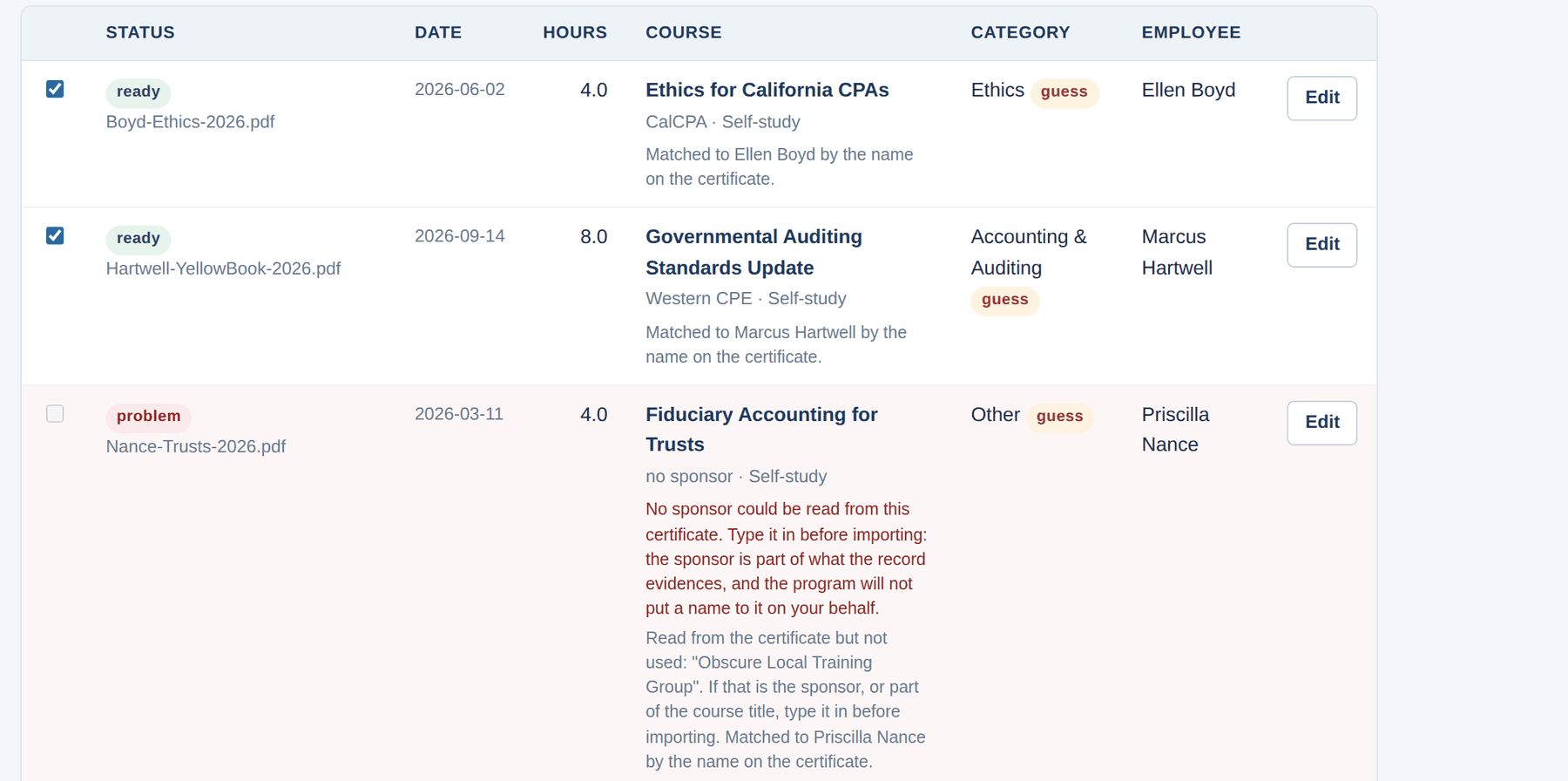
Nothing is filed from a certificate until it has been shown to you. Each row carries the file it came from, the values read out of it, how the employee was matched, and — where there is one — the reason it is not ready. Rows with a problem come in unticked.
What comes off a certificate
Certificates are not a format. One prints Field of Study: down the left, one puts the caption above the value, one lays the whole thing out in the middle of the page with no labels at all. The reader tries all three, in that order, and tells you which fields it had to infer.
The awkward ones
The easy ones all work. These are the six that decide whether the records are evidence or decoration, and each of them is a test that runs before the program ships.
Some certificates are typeset so that a PDF hands over D a t e o f C o m p l e t i o n one glyph at a time. The words are put back together from the spacing on the page, which means the date and the hours survive — the two fields a wrong answer does the most damage to.
An eight-hour update that is 3 hours accounting, 3.5 hours governmental auditing and 1.5 hours tax becomes three records, not one, because that is how the board counts it. The pieces are noted as sections of the same certificate so the file still ties back to one PDF.
The reader used to fall back to a default sponsor when it could not tell. It does not any more. An unrecognised sponsor comes back empty and the row is held, because a CPE record naming the wrong sponsor looks exactly like evidence and is not. Plenty of sponsors print their name only in the logo, which is a picture: name them once for the batch and those rows take it, with a note saying where the name came from.
Same person, same day, same hours, same course — that is the same course. Duplicates inside one batch and against what is already recorded are both found, and you can skip them in one tick.
Firms that already keep a spreadsheet import that instead. Columns are matched by heading in any order, under any number of title rows; only a date and an hours column are required, and a licensee column lets one sheet cover the whole firm.
The PDFs are read in your own browser. Only the text that comes out of them is sent to the program — the certificate files themselves are not uploaded and not kept. Up to 60 certificates in one go.
What it is for
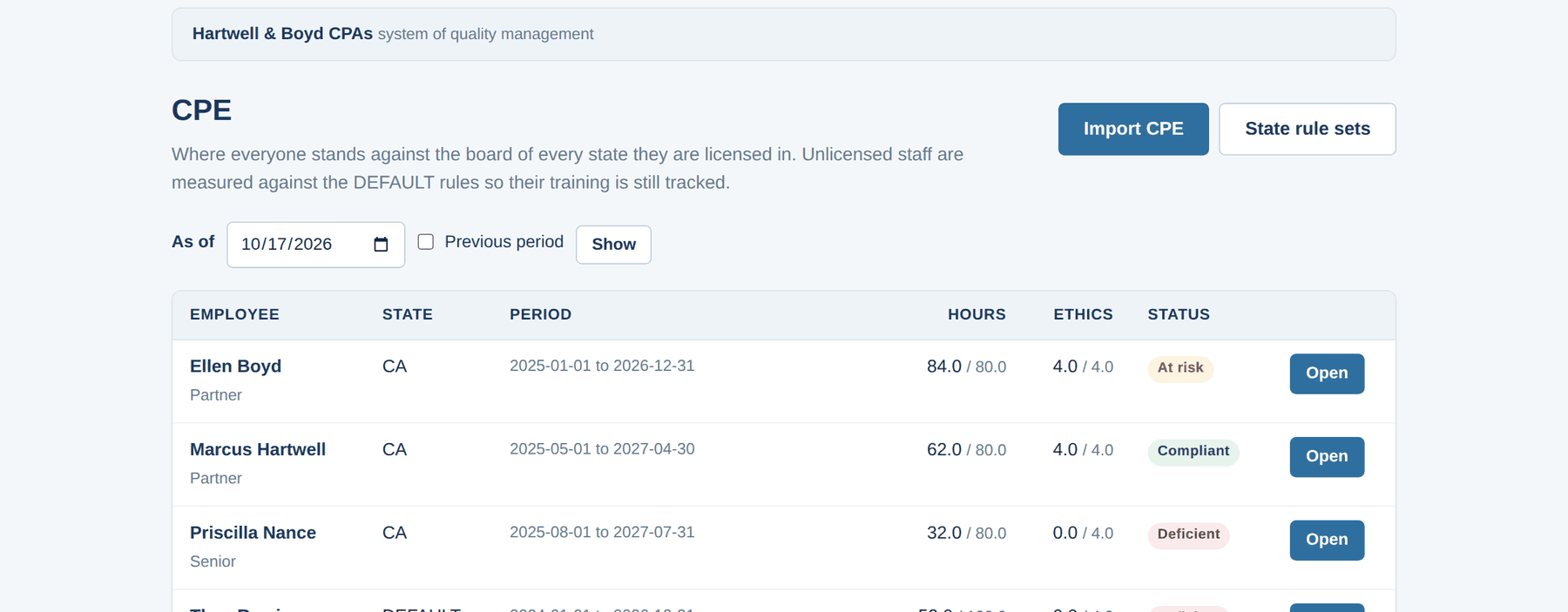
Hours in a list prove nothing. What a firm needs to know is whether each licensee is going to make renewal, in every state they hold a licence in, under the rules of that state — and it needs to know it while there is still time to do something about it.
On paper
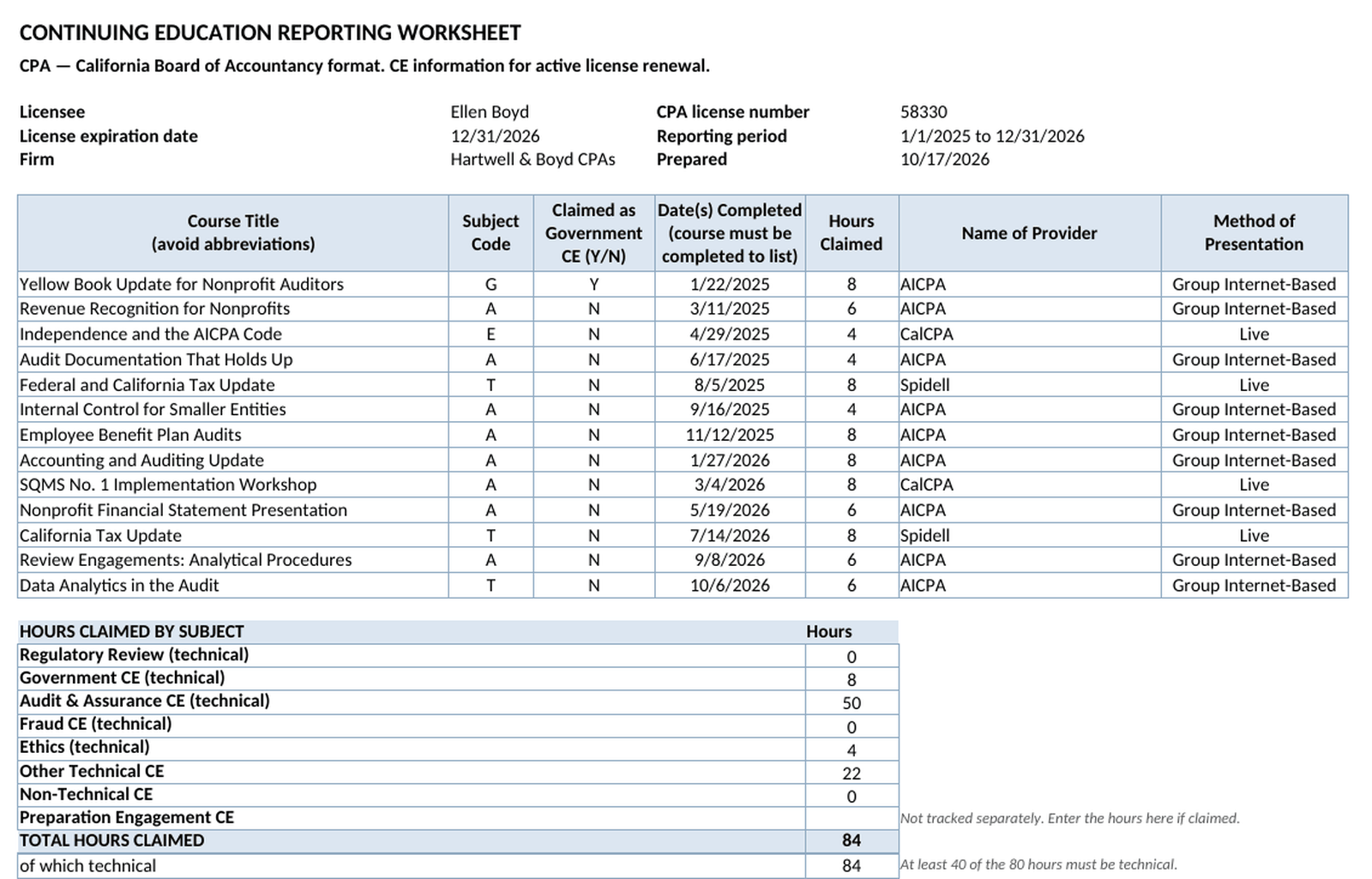
What the reader takes off a certificate, what it refuses to guess at, and where the record ends up. Written from the program itself — every figure on it is checked against the running code before the sheet is built.
A PDF you can hand to a partner or send on. Same screens, same figures, nothing that is not in the program.
The practice management series covers the same ground on screen — the firm’s people, the hours they carry, and how the program decides whether that is enough.
The CPE reader sits inside the portal alongside the firm’s quality management system, its clients and its engagements — which is the point of it. Hours read off a certificate are what the engagement screens draw on when they ask whether the people assigned to a bank or a single audit are qualified to be on it. If you would like to see it on your own certificates, write to me and I will show you.